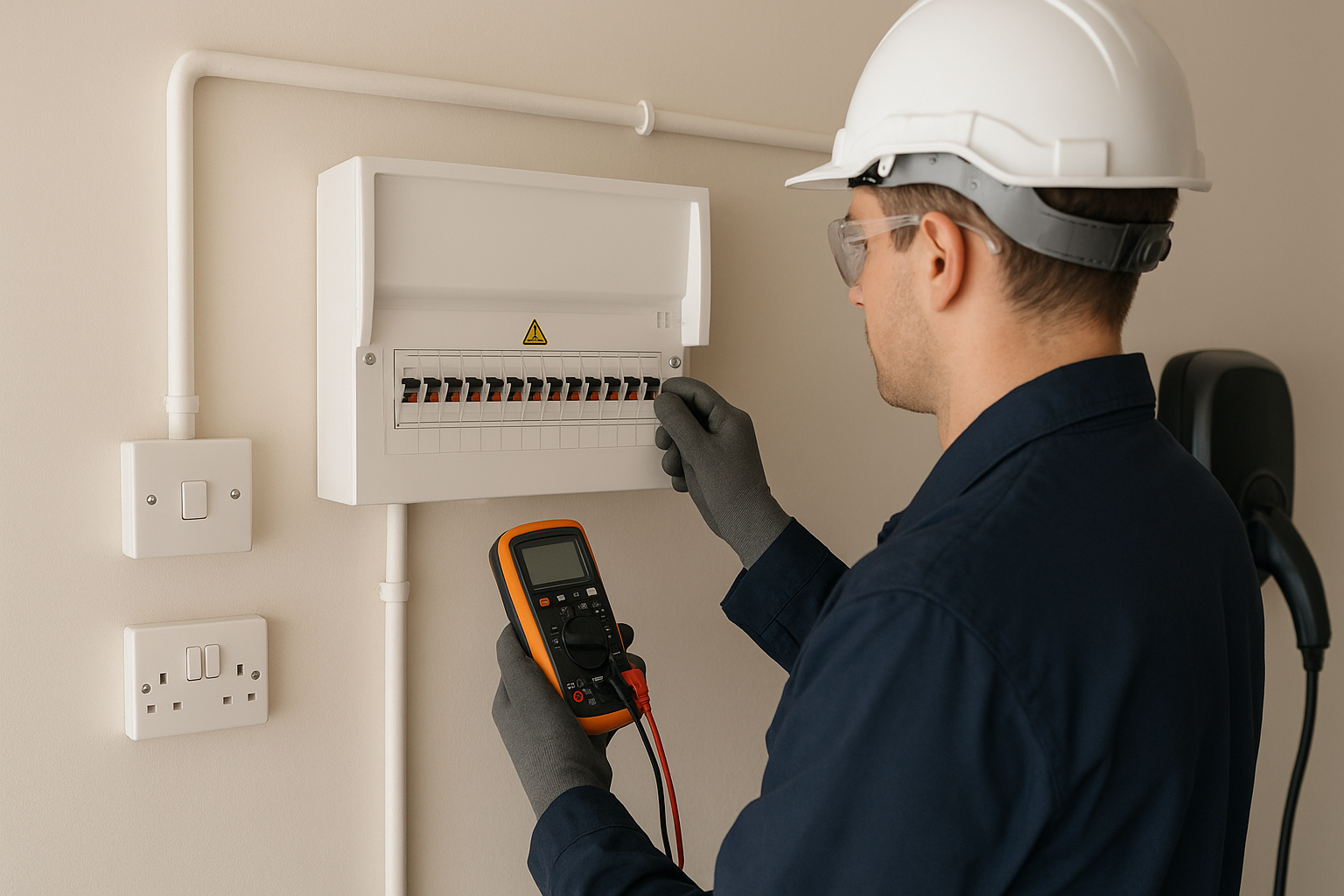
If your fuse box keeps tripping, a breaker will not reset, or you have noticed a burning smell near the consumer unit, treat it as a safety issue and stop using the affected circuits. At Fuse Works Electrics, we provide fuse box repair in Dalston with a cautious, fault-finding approach focused on identifying the cause before any parts are replaced. That matters in homes and businesses across Dalston, Hackney, Stoke Newington, London Fields, Canonbury and Haggerston, where older wiring, converted flats, Victorian terraces and mixed-use buildings can all develop different electrical faults.
We help homeowners, landlords, tenants and property managers with fuse box fault finding, tripping breaker investigation, RCD nuisance tripping, faulty breaker replacement and fuse board safety checks. If the issue is an old fuse wire board, a damaged breaker, loose connection, overloaded circuit or a deeper wiring fault, we aim to explain the problem in plain language and offer practical options. If you need urgent help, call 020 3670 0212 or request a visit today.
Common warning signs include buzzing from the fuse board, heat around the consumer unit, half the house losing power, repeated tripping after using an appliance, or a breaker that trips and then immediately trips again when reset. These symptoms do not always mean the fuse box itself is faulty. In many cases, the real issue is on the circuit, at a socket, light fitting, cooker connection, shower circuit or outdoor supply. That is why careful testing is the safest way to proceed.
We also support nearby streets and local landmarks around Dalston Junction, Dalston Kingsland, Ridley Road Market, Kingsland High Street and the Rio Cinema. If you are comparing options for electrical repairs, consumer unit work, lighting installation, socket installation or fault finding, our service is built around the actual problem rather than a guess.
Fuse Box Fault Finding in Dalston
Fuse box fault finding starts with understanding whether the consumer unit, breaker, RCD or connected circuit is causing the problem. In Dalston properties, we often see a mix of older rewires, updated consumer units and circuits that have been altered over time. In a Victorian terrace, a converted flat or an older shop unit, repeated tripping can come from overloading, damaged accessories, water ingress, deteriorated cable insulation or a loose termination that needs attention.
For fuse box fault finding Dalston customers usually want a clear answer: is the board safe to keep using, or does it need repair or replacement? We inspect the visible equipment, ask when the fault occurs, and trace the problem circuit by circuit. If a socket ring, lighting circuit, cooker supply or immersion heater is involved, we test carefully to narrow down the likely cause before recommending the next step.
Where possible, we explain whether the issue is likely to be repaired locally, whether a breaker or component needs replacing, or whether the age and condition of the fuse board make a fuller consumer unit upgrade more sensible. We do not encourage DIY opening of the consumer unit. If there is exposed wiring, a burning smell or signs of heat damage, switch off the affected circuit if you can do so safely, keep clear of the area and arrange an electrician promptly.
Tripping Breaker Investigation in Dalston
A tripping breaker investigation in Dalston usually begins with the pattern of the trip. Does it happen when a kettle, heater, washing machine or oven is switched on? Does it only occur in wet weather? Does the breaker trip at night when nothing obvious is being used? The answer often points towards overload, appliance fault, moisture, damaged wiring or a circuit that has been altered beyond its intended capacity.
Repeated tripping can be frustrating, especially in flats near Dalston Kingsland or in shared properties where one circuit affects several rooms. But a breaker that trips is doing its job by disconnecting power when it detects a problem. The important part is finding out why it is happening. We inspect the circuit, identify any damaged equipment, and test the wiring and connected accessories to establish whether the issue is local to one appliance, one outlet or the wider circuit.
In some cases, the breaker itself is worn or no longer operating as intended. In others, the investigation reveals a socket with heat damage, a failed light fitting, a loose connection behind an accessory plate, or a circuit that is being asked to carry too much load. We will talk you through the findings and, where appropriate, discuss electrical repairs or consumer unit work that may be needed to restore safe operation.
For landlords and property managers, repeated tripping can also be a sign that a flat or commercial unit needs a broader inspection after tenant reports of intermittent power loss. We can assess the fault and advise on the most practical route forward without overcomplicating the issue.
RCD Nuisance Tripping in Dalston
RCD nuisance tripping in Dalston is often reported when a protective device keeps switching off even though no obvious fault is visible. While people sometimes call it nuisance tripping, the device may be reacting to a real problem such as moisture, leakage current from an appliance, damaged cable insulation or a fault in an outdoor circuit. The key is not to ignore it simply because the trip seems random.
This is especially relevant in homes with garden lighting, exterior sockets, older bathroom circuits or appliances that are used heavily. In London Fields and Haggerston properties, we often find that external fittings, damp areas or ageing accessories contribute to the fault. A careful inspection can determine whether the RCD is operating correctly or whether the circuit is developing a fault that needs repair.
If your RCD keeps tripping, avoid repeatedly resetting it without understanding the cause. That can mask a problem and may make the situation worse. Instead, turn off the affected appliances if you can do so safely, leave the circuit isolated if necessary, and arrange a visit. We can test the circuit, check for leakage issues, look for damaged equipment and advise whether the answer is repair, replacement or further fault finding.
For some properties, especially older rewires or mixed-age installations, the best solution may involve a combination of repairs and consumer unit improvements. We will only recommend what the evidence supports and will explain the options in straightforward terms.
Faulty Breaker Replacement in Dalston
Faulty breaker replacement in Dalston is only appropriate when testing shows the breaker itself is the problem. A breaker should not be replaced simply because it has tripped. It may be protecting the circuit from a genuine fault. That is why we test first and replace parts only when there is a clear reason to do so.
Signs that a breaker may be failing include difficulty resetting, visible wear, heat damage, buzzing, or inconsistent operation compared with the rest of the consumer unit. In some cases, the breaker is not the root cause but has become damaged by repeated fault conditions elsewhere on the circuit. When that happens, replacing the breaker without addressing the wiring issue would not solve the real problem.
Our approach is to inspect the equipment, confirm the fault, and then discuss the most suitable repair. If the breaker is obsolete, damaged or no longer reliable, we can advise on a safe replacement option. If the wider board condition is poor, we may recommend consumer unit work instead, especially where the installation is older or shows signs of deterioration.
Customers in Canonbury and Stoke Newington often contact us after trying to restore power themselves and finding that the breaker will not stay on. In that situation, the safest response is to leave it isolated and arrange a professional inspection. We can also help identify whether the fault is coming from a socket circuit, lighting circuit, kitchen appliance or another connected load.
Fuse Board Safety Checks in Dalston
Fuse board safety checks in Dalston are important if your installation is old, has been altered over time, or shows signs of wear. This is particularly relevant in Victorian terraces, converted flats, older rewires, modern flats and commercial premises around Kingsland High Street and the surrounding streets. A board may look tidy from the outside while still having issues inside the enclosure or on the connected circuits.
During a safety check, we look for signs such as overheating, loose or damaged accessories, outdated fuse wire boards, poor labelling, evidence of previous faults and indications that the consumer unit no longer suits the demands of the property. We also consider whether the installation history suggests the need for additional testing or a more substantial upgrade.
For landlords and property managers, fuse board safety checks can be a sensible step when a tenant reports intermittent loss of power, repeated tripping or a burning smell. For homeowners, they provide reassurance when a property has been extended, refurbished or occupied by multiple generations with different electrical additions. If a circuit or accessory needs attention, we will explain the issue and the available repair options.
Some electrical work may be notifiable under Part P of the Building Regulations and should be certified where applicable. If you are unsure whether a repair, replacement or upgrade is required, we can talk through the practical implications before any work is booked.
Fuse Works Electrics is based at 10 Roseberry Pl, London E8 3GA, United Kingdom and serves Dalston and nearby areas including Hackney, Stoke Newington, London Fields, Canonbury and Haggerston. We also handle related services such as electrician callouts, emergency electrician support, electrical repairs, consumer unit work, lighting installation, socket installation, electrical fault finding and domestic electrician work.
Recent local work has included a socket replacement visit in Stoke Newington, where damaged socket fronts were replaced and the circuit tested so the outlets could be used safely again; an outdoor light repair in London Fields, where we checked a failed external light, inspected the wiring and fitting, and advised on a practical replacement option; and a fuse box advice visit in Canonbury, where circuits were tripping and the customer was given plain-language guidance on consumer unit repair or upgrade options. These are the kinds of real-world problems that often sit behind a simple request for fuse box repair.
If you are dealing with exposed wiring, burning smells, repeated tripping or a fuse board that does not seem right, do not keep resetting the breaker and hoping it will settle. Switch off the affected circuit if it is safe to do so, keep clear of damaged wiring, and book an electrician to inspect it properly. Call 020 3670 0212 or email info@dalston-electricians.co.uk to request a visit today.